Functional Fitness Exercises: A Trainer's Complete Programming Guide
Functional Fitness Exercises: A Trainer’s Complete Programming Guide
Functional fitness exercises have become one of the most overused terms in the fitness industry — and one of the most misapplied. Walk into any commercial gym and you’ll find trainers calling a Bosu ball bicep curl “functional training” while ignoring the fact that their client still can’t pick a bag of groceries off the floor without rounding their spine. The concept matters, but the execution is often sloppy.
At its core, functional fitness refers to training movement patterns that transfer directly to real-life activities or sport-specific demands. It’s not about equipment — it’s about movement. Squatting, hinging, pushing, pulling, rotating, carrying, and locomotion form the foundation of how human bodies actually work. When your programming is built around these patterns rather than isolated muscle groups, your clients get stronger in ways they can feel outside the gym.
This guide breaks down what functional fitness actually means in practice, which exercises deliver the most transfer, and how to structure functional training into client programs regardless of their goal or experience level.
What Makes an Exercise “Functional”
An exercise earns the label “functional” when it trains movements that mirror or directly support the demands of a client’s daily life, sport, or occupation. The key criteria: it should require multi-joint coordination, engage stabilizing muscles under load, and reinforce movement patterns the body uses outside of a controlled gym setting.
A Romanian deadlift is functional. It trains the hip hinge pattern used every time a person bends over — loading dishes into a dishwasher, lifting a child, picking up a box. A seated leg extension isolates the quadriceps but has almost no carry-over to how that muscle actually functions during locomotion or landing from a jump.
That doesn’t mean isolation work has no place in programming. Corrective exercises, injury rehabilitation, and hypertrophy blocks all have legitimate uses for targeted isolation. But the spine of any well-designed program — especially for general population clients — should be built on compound, multi-joint movements that reflect how the body actually moves.
The Seven Foundational Movement Patterns
Every functional program worth building is organized around the same seven movement patterns. Master these, and you’ve covered the mechanical demands of virtually every client you’ll train.
Squat — bilateral and unilateral knee-dominant patterns (goblet squat, split squat, step-up). Hinge — hip-dominant loading patterns (deadlift, Romanian deadlift, kettlebell swing). Push — horizontal and vertical pressing (push-up, overhead press, dumbbell bench press). Pull — horizontal and vertical pulling (row, pull-up, lat pulldown). Carry — loaded locomotion (farmer’s carry, suitcase carry, overhead carry). Rotation/anti-rotation — transverse plane control (Pallof press, cable chop, rotational medicine ball throw). Locomotion — gait-based patterns (lunge, lateral shuffle, sled push).
Most of your clients’ movement deficiencies live in the hinge and carry categories. They sit all day, so they’ve lost the ability to load the posterior chain effectively and they have no experience carrying objects under tension. Prioritize accordingly.
Designing a complete program around these patterns requires knowing how to balance volume and frequency — see our guide to designing client workout plans for the full framework.
The Best Functional Fitness Exercises by Goal
Context determines exercise selection. A 62-year-old client training for independence and fall prevention needs different emphasis than a 28-year-old recreational soccer player. Here’s how to filter the movement patterns by training goal.
For general population and longevity clients: Prioritize goblet squats, trap bar deadlifts, single-arm rows, farmer’s carries, and step-ups. These build strength through full range of motion with low technical demand and high transfer to daily tasks. The trap bar deadlift in particular is one of the most underused tools for older clients — it’s easier to learn than a barbell hinge and allows significant loading without requiring the same hip mobility.
For athletes: Add rotational power work and unilateral loading. Single-leg Romanian deadlifts, rotational medicine ball throws against a wall, cable chops, and lateral lunges all train the transverse and frontal plane demands that most sports require. Speed of movement matters here — power training isn’t just about load, it’s about rate of force development.
For weight loss and general fitness clients: Compound, multi-joint movements burn more calories and produce more metabolic demand than machine-based isolation training. Circuits built around kettlebell swings, push-up variations, goblet squats, and rows — kept at moderate loads with short rest intervals — produce high work density and strong hormonal response.
Programming Functional Training: Structure and Sequencing
How you sequence functional exercises matters as much as which ones you select. Placing your most technically demanding movements at the start of a session — when the nervous system is fresh — protects movement quality and reduces injury risk.
A practical session structure: begin with 5-10 minutes of movement preparation (not passive stretching — active mobility drills specific to that day’s patterns), then move into neural activation or power work (medicine ball throws, jump variations), followed by primary strength work (your main squat or hinge pattern at the heaviest load of the session), then accessory compound work, and finish with carries or loaded locomotion as a conditioning finisher.
For programming across a week, apply a push-pull-hinge-squat balance to avoid hammering the same patterns every session. A three-day full-body split works well for most general population clients: Day 1 emphasizes squat and horizontal push/pull, Day 2 emphasizes hinge and vertical push/pull, Day 3 integrates carries, rotational work, and locomotion patterns.
Progressive overload still applies here — don’t let “functional” become an excuse for never increasing load or complexity. The trap bar deadlift should get heavier over time. The farmer’s carry distance or load should increase. Track it.
Mobility as a Prerequisite for Functional Training
You can’t train functional movement patterns effectively if a client lacks the range of motion to perform them. A squat that turns into a morning stretch because of limited ankle dorsiflexion isn’t functional — it’s just a compensation pattern loaded under tension. Before you build strength, you need to build access.
The most common mobility limitations that restrict functional movement: hip flexor tightness limiting hinge depth, restricted thoracic extension undermining pressing mechanics, limited ankle dorsiflexion collapsing squat patterns, and poor shoulder external rotation degrading overhead work. Screen for these in your intake assessment before you write a single set and rep scheme.
Integrating mobility work doesn’t mean spending 30 minutes stretching before every session. It means using targeted mobility drills within your warm-up that directly address the patterns you’re about to train. If today’s session centers on squatting, your prep includes ankle mobilizations, hip 90/90 transitions, and goblet squat holds at depth. For more on building this into your programming, see our resource on mobility work for clients.
Common Programming Mistakes With Functional Exercises
The first mistake: confusing instability with functionality. Standing on one leg to perform a dumbbell press doesn’t make it more functional — it just reduces the load you can use and shifts the training stimulus away from shoulder development toward balance. Instability tools like Bosu balls have specific corrective and rehabilitation applications, but they’re not a substitute for heavy, stable compound loading for most clients.
The second mistake: neglecting the posterior chain entirely. Most clients sit all day, which means their glutes are underactive, their hip flexors are shortened, and their thoracic spine is rounded. If your program is push-dominant without balancing it with equal or greater pull volume, you’re compounding the dysfunction that already exists. Row to press ratios should be at minimum 1:1, often 2:1 for clients with desk jobs.
The third mistake: skipping loaded carries. Farmer’s carries, suitcase carries, and overhead carries are some of the highest-transfer exercises you can program. They train grip, core stability, gait mechanics, and total-body tension simultaneously. They’re also easy to scale, require minimal coaching, and clients almost universally find them satisfying. Put them in your programs.
Organizations like NASM provide systematic frameworks for corrective exercise and movement screening that can help you build better intake protocols and catch these issues before they become programming problems.
Building Progressions That Keep Clients Moving Forward
Functional training progressions follow the same principles as any other strength training: increase load, volume, complexity, or instability — one variable at a time. A clean progression model moves from stable to less stable, bilateral to unilateral, slow to fast, and simple to complex.
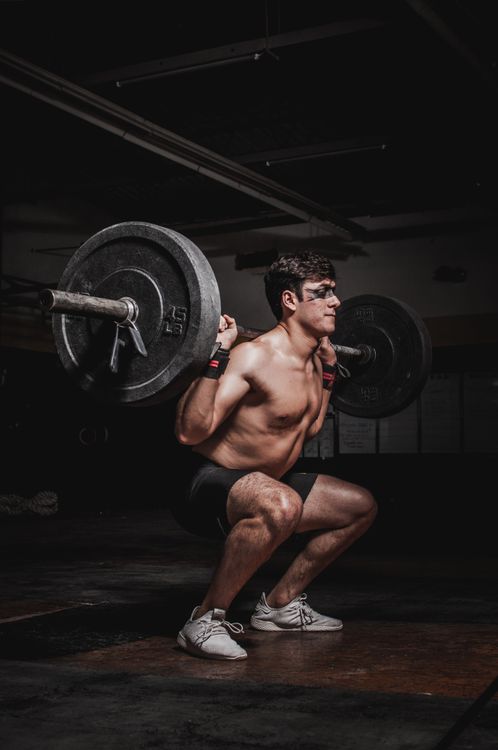
Example progression for the squat pattern: goblet squat (stable, bilateral, controlled) → front squat or safety bar squat (more demand on positioning) → split squat → rear-foot-elevated split squat → single-leg squat variations. Each step demands more proprioceptive and stabilization ability without sacrificing load potential.
For the hinge: kettlebell deadlift → trap bar deadlift → Romanian deadlift → single-leg RDL → kettlebell swing → hip hinge power variations. Clients who progress through this ladder build a posterior chain that functions — not just one that looks good in a gym mirror.
Document these progressions in your programming so you’re never guessing where a client is in their development. Systematic tracking separates trainers who get consistent results from those who wing it session to session.
For more strategies like this, subscribe to our free newsletter — thousands of trainers get weekly tips on programming, business, and client results delivered straight to their inbox.
Final Thoughts
Functional fitness exercises, when properly programmed, produce the kind of results that keep clients training with you long-term — because they feel the difference outside the gym. The goal was never to make exercise look impressive. It was to make clients move better, feel stronger, and stay out of pain.
Build your programs around the seven foundational patterns. Assess mobility before loading movement. Sequence sessions intelligently. Track progressions. And resist the industry pressure to make training unnecessarily complicated — a well-loaded goblet squat will do more for most clients than any gimmick involving unstable surfaces and circus-level coordination demands.
Your clients are trusting you with their physical capacity. Functional training done right honors that trust.
Free Newsletter
Want more tips like this?
Join thousands of personal trainers getting weekly insights on building their business and improving their craft.