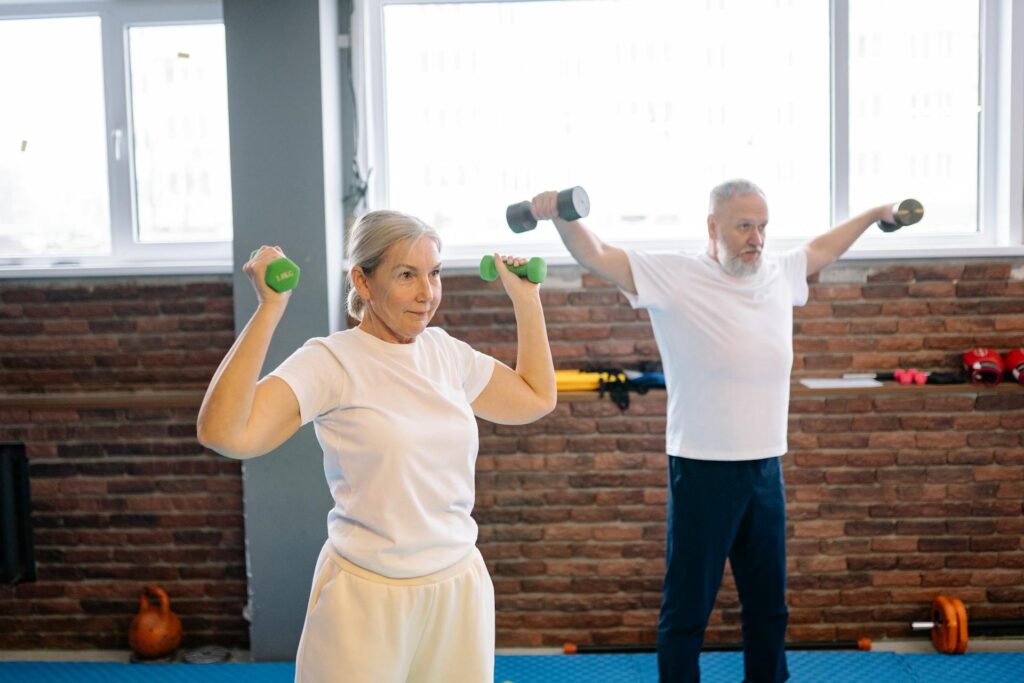
Most trainers chase the obvious crowd. Twenty something clients. Six pack selfies. Endless talk about macros, glutes, and whether cold plunges unlock mystical Viking powers. Meanwhile, a massive group of people actually needs smart coaching, has real goals, and will thank you like you just saved their week. Seniors.
I will say it bluntly. Becoming a personal trainer for seniors is one of the smartest moves in fitness right now. Not because it is trendy. It is not. Not because it looks sexy on Instagram. It definitely does not. It is smart because it matters, because demand keeps rising, and because the work has depth. Real depth. The kind that makes you feel useful instead of just professionally adjacent to a ring light.
This Is Not Just Fitness. It Is Quality of Life.
A younger client often wants visible results. Fair enough. A senior client usually wants something bigger. They want to get off the couch without bracing like an old folding chair. They want to walk upstairs without negotiating with gravity. They want to carry groceries, travel, garden, play with grandkids, and not feel fragile.
That changes the whole job.
A geriatric personal trainer does not just count reps. You are helping people hold on to autonomy. You are protecting balance, mobility, coordination, strength, and confidence all at once. That is a much richer assignment than babysitting another cable machine curl.
And yes, it is emotional work too. In a good way. I have seen entire careers built on flashy branding and zero substance. This niche is the opposite. Here, substance wins. A senior personal trainer who understands movement, patience, and safety becomes incredibly valuable, incredibly fast.
The Market Is Growing, Quietly and Relentlessly
Aging populations are not a niche fantasy. They are reality. Every year, more adults move into later life stages, and many of them are actively looking for better health support. Not vague inspiration. Actual guidance. The kind a personal trainer for older adults can provide with structure and care.
That means this field has serious demand. Not fake guru demand. Real demand.
Many families are also involved in the decision. Adult children often want their parents to stay strong, steady, and independent. Retirement communities want programs. Wellness centers want specialists. Private clients want in home sessions. Rehab adjacent businesses want trainers who can work responsibly around limitations. Suddenly, your role as an elderly personal trainer expands into a practical service with multiple income paths.
Why this niche keeps opening doors
- The client base is expanding every year
- Seniors often value consistency more than novelty
- Families are willing to invest in safety and independence
- Communities, clinics, and wellness centers need specialized trainers
- Referrals can snowball when trust is earned
That last point matters. A lot. One happy senior client can turn into three referrals faster than a bro client can say “functional fitness” while standing on a Bosu ball for no reason.
You Get to Be More Than a Rep Counter
There is a weird dead zone in fitness where some trainers become human stopwatches. They bark cues, count down sets, and collect payments. That is not coaching. That is expensive furniture with a clipboard.
A personal trainer senior specialist has to think more deeply. You assess posture, gait, joint comfort, balance, energy, medical history, and daily function. You adjust on the fly. You teach calmly. You monitor recovery. You build trust through competence rather than noise.
That is real coaching.
As a trainer for seniors, you are not trying to crush people. You are trying to progress them without tipping into risk. That takes maturity, observation, and better programming instincts than a lot of general population training ever demands. Put simply, this work can make you a better coach, period.
The Results Are Smaller on Paper and Bigger in Real Life
Here is the thing nobody tells you. A senior client improving from eight chair stands to twelve can matter more than a younger client adding ten pounds to a vanity lift. Why? Because the transfer to daily life is enormous.
A physical trainer for seniors often works in practical wins:
- Standing up more easily
- Reducing fear of falling
- Walking longer without fatigue
- Moving with less stiffness
- Climbing stairs with confidence
- Carrying bags independently
- Staying active after surgery or illness
These are not tiny victories. These are life victories.
And they come with gratitude. Genuine gratitude. Not the “fire emoji, coach” type. Real appreciation. The kind that reminds you your work is not content creation in leggings. It is service.
This Niche Rewards Patience, Not Ego
If your favorite thing about training is hearing yourself talk, this may not be your lane. Seniors do not need motivational theater. They need clarity, reassurance, and progression they can trust.
A senior personal training session often moves at a more thoughtful pace. You explain more. You observe more. You correct with tact. You leave room for questions. Sometimes you repeat yourself. Then repeat yourself again. Welcome to coaching, not performance art.
That slower rhythm is actually one of the best parts. It strips away nonsense. No trend chasing. No feature creep. No exercise menu bloated like bad software. Just the essentials, executed well.
I love that. There is something satisfying about programs that do what they are supposed to do. Clean inputs. Useful outputs. Minimal chaos.
Skills that matter most in this role
- Clear communication
- Empathy without babying the client
- Strong exercise regression skills
- Respect for medical boundaries
- Sharp observation
- Session planning with flexibility
- Calm confidence
That is the profile of a senior trainer people keep around.
Certifications Help, but They Are Not Magic Dust
You should absolutely study the field. This is not the place to freestyle your way through a session because you watched three reels and once stretched a hamstring. A senior fitness certification can help you understand aging physiology, contraindications, balance training, bone health, and appropriate program design.
Many trainers look at the ISSA senior fitness certification when moving into this area, and that makes sense. The ISSA senior fitness certification is one of the terms many aspiring coaches search when they want structured education around older adult fitness. A senior fitness certification, whether through ISSA or another recognized path, can help position you as a more credible personal trainer for seniors.
Still, let me be annoyingly honest for a second. Certification is the entry ticket, not the whole show.
A badge does not magically make you a great geriatric personal trainer. Your behavior does. Your listening. Your judgment. Your willingness to stay inside safe boundaries. Your refusal to let ego write programs your client cannot recover from. Plenty of certified people are still walking examples of polished nonsense.
Your Income Can Be More Stable Than General Fitness
General fitness can be flaky. One week your client is locked in. Next week they have a juice cleanse retreat, a startup meltdown, a minor identity crisis, and suddenly your schedule looks like abandoned code. Senior clients are often more reliable.
Why? Routine.
Many older adults value recurring appointments and structured support. Once they feel safe with you, they tend to stay longer. Retention can be excellent. That matters more than flashy acquisition. Every business owner learns this eventually, usually after burning cash like a bonfire at a bad product launch.
A personal trainer for senior clients can build revenue from several channels at once:
- Private one on one sessions
- Small group classes for older adults
- In home training
- Training inside senior communities
- Partnerships with physical therapy adjacent clinics
- Family funded wellness plans
- Online coaching for mobility and strength maintenance
That kind of spread reduces dependence on a single stream. Smart move. Less panic. Better business.
You Can Stand Out in a Crowded Industry
The fitness industry is noisy. Everyone is a “coach.” Everyone has a framework. Everyone has a secret method that looks suspiciously like common sense wrapped in branding. Specializing cuts through that noise.
When you become known as a personal trainer for older adults, your positioning sharpens immediately. You stop competing with every trainer in town. You become the person for a specific population with specific goals. That is easier to market, easier to explain, and easier for clients to trust.
And the messaging practically writes itself. Not because marketing is easy, but because the problem is clear.
- Improve strength for daily life
- Support balance and fall prevention
- Build confidence after inactivity
- Encourage safe independence
- Create sustainable personal training for seniors
That is compelling. It is concrete. It sounds like help, not hype.
The Work Has More Humanity in It
This part matters more than business, though business matters plenty.
A personal trainer older adults trust often becomes part coach, part educator, part calm presence. You learn stories. You hear about surgeries, spouses, grandchildren, fears, routines, grief, determination, and weirdly strong opinions about soup. The relationship becomes richer than what you usually get in generic gym culture.
That is not a small thing.
A lot of people stumble into careers that feel hollow after a while. This one can feel grounded. Useful. Specific. Human. Senior personal trainers often see the direct impact of their work in ways that are impossible to ignore. Better posture. Better confidence. More walking. Less fear. More life.
And here is a spicy little truth the industry does not always admit: some of the most meaningful coaching happens far away from mirrors, influencers, and shredded twenty year olds posing like decorative assault weapons.
What makes a great session with seniors
- Warm up with intention, not filler
- Prioritize function over novelty
- Use simple cues
- Track fatigue closely
- Progress slowly and proudly
- Celebrate practical wins
- End with confidence, not exhaustion
That is senior personal training done properly.
It Will Force You to Respect Safety Without Becoming Fearful
Working as an elderly personal trainer means you must understand risk, but you cannot become timid. Those are two different things. Seniors need challenge. They need strength work. They need balance training. They need progressive overload scaled intelligently. They do not need to be wrapped in metaphorical bubble wrap and marched through endless seated toe taps like decorative museum pieces.
This is where great coaching shows up.
A personal trainer for senior populations learns to thread the needle. You challenge enough to stimulate adaptation. You respect limitations without turning them into identity. You build confidence through successful exposure to movement, not through avoidance of everything interesting.
That balance is hard. It is also one of the reasons this niche develops serious professionals.
You Will Probably Feel Better About Your Career
Here is my pitch without pretending it is not a pitch. If you want a role that blends coaching skill, business opportunity, emotional reward, and long term relevance, becoming a senior personal trainer is a smart bet. You can earn well. You can specialize meaningfully. You can stand out in a crowded market. Most importantly, you can do work that has visible value beyond aesthetics.
There is also a quiet pride in being the person who helps someone stay independent. A personal trainer for seniors does not just help people “get fit.” You help them keep driving, traveling, lifting, reaching, walking, rising, and living with less fear. That is serious work. Noble work, even if that sounds a little dramatic. I will allow it.
If you are considering the path, start with education. Get a senior fitness certification. Study movement for aging populations. Learn contraindications. Practice cueing. Observe skilled coaches. Build patience. Then go serve real people with real needs. The opportunity is there. The demand is there. The meaning is definitely there.
Become the coach who matters when it matters most.
Turns out the strongest flex is helping someone stand up without making it a side quest.

Leave a Reply